
Content Warning: detailed discussions of death, violence, necrophilia and sexual assault
Recently Norwegian philosophy professor Anna Smajdor made the suggestion that ‘brain-dead’ women should be used as surrogate mothers, arguing: “We already know that pregnancies can be successfully carried to term in brain-dead women. There is no obvious medical reason why initiating such pregnancies would not be possible”.
Note: legally in the UK, ‘brain-death’ IS considered death, as the damage is irreversible, unlike when one is in a ‘vegetative state’ (within which, some consciousness may still exist).
It has understandably caused an uproar across the internet, as Smajdor floats the idea that “whole body gestational donation offers an alternative means of gestation for prospective parents who wish to have children but cannot or prefer not to gestate”, insinuating in such a dystopian Handmaid’s Tale-esque way that women’s bodies are a reproductive utensil for other (frequently wealthier, more privileged women) to be given the right to exploit. Though Smajdor makes the suggestion that there should be a consensual ‘register’ set up, for those who may in the future want to support women who are unable to have their own kids, in the case of becoming ‘brain dead’, as there is for organ donation, her suggestion does ultimately push the prospect of brain-dead women essentially becoming ‘incubators’ in a period of time where womens’ reproductive rights continue to be up for debate and have not been achieved globally.
Surrogacy and adoption within themselves are problematic for many other reasons, but this article will not focus on these, but rather on discussing the ways in which women are treated in death: how womens and girls’ dignity in death has often been overruled and disregarded across the globe. Throughout centuries and cities, bodily autonomy in death has been denied for many, particularly the poorest, most vulnerable men, yet it also has been a gendered issue, and this article will explore how women and girls’ dignity in death has been overruled and disregarded, and how this persists.
In the past few years in the UK, some horrific cases of abuses of power from men in senior and protective, public-serving positions, have come to light. Two Met police officers have been jailed for two years, for taking pictures with the dead bodies of Nicole Smallman and Bibaa Henry, two black sisters who were stabbed to death in a park in North London. The two officers shared these images on group chats with upwards of 40 people, where vile comments were made, addressing the women as ‘dead birds’.
This case does not stand alone – numerous Dorset and Wiltshire firefighters have been accused of spreading images of women who had died in car accidents, with others commenting on the underwear the women wore among other degrading comments. This case does not stand alone – David Fuller’s sexual assault of over 100 female corpses, which he recorded, as well as the murder of 2 women, whilst working as an electrician in a hospital in Kent, across several deecades. And all of these incidents do not stand alone, there are hundreds more – but rather they are a chilling reminder of the lack of protection women are provided even in death, by those exact men who are supposedly given a duty of care.
In the US, Evelyn McHale’s suicide in 1947 was deemed the “most beautiful suicide” in history, with photographs of her dead body being circulating immediately after she jumped from the 86th floor of the Empire State Building. Her suicide note clearly stated she did not want her family to see her body and she wanted to be cremated, yet her wishes were completely overlooked and her body instead was ‘aestheticised’, romanticised and put on display for thousands to see, remaining still an incredibly famous image.
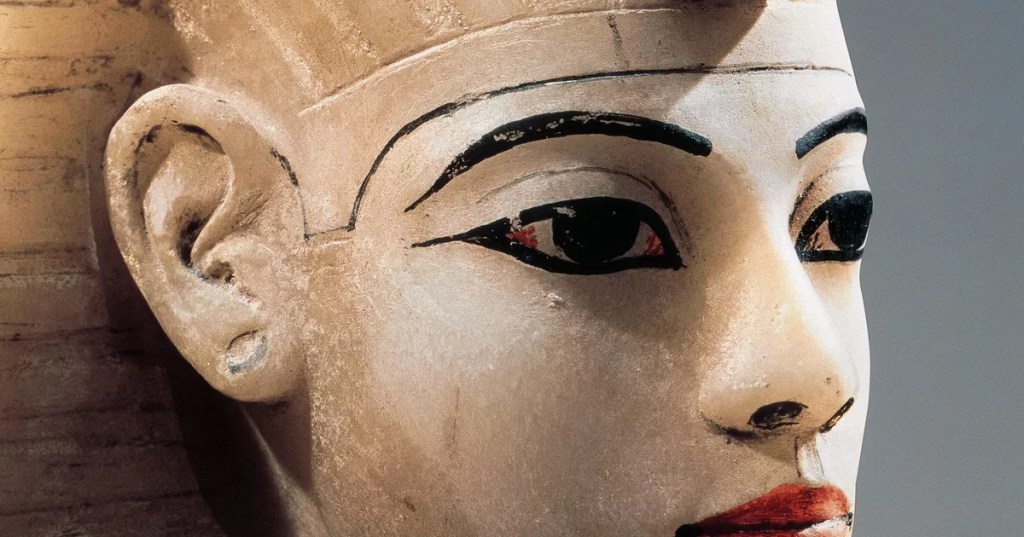
However, womens’ corpses being disrespected post-death is of course not a modern phenomena, but rather one that has transcended eras and locations, simply made more visible to wider society now through social media and advances in science and technology. Ancient Egyptian mummies are famously some of the most well-preserved archaic artefacts, and are able to tell us so much about ancient civilisations, and though there is a wealth of knowledge about famous Ancient Egyptian women, such as Cleopatra and Nefartiti, there remains a huge rift between the state and quantity of womens’ and mens’ mummies, and therefore the knowledge we have been able to accumulate about both.
As Herodotus explains in his ‘Histories’, female corpses, particularly of attractive women, were left at home for 3 or 4 days, to become much more decomposed, before being handed over to embalmers, in order to discourage the rape of their corpses. Similarly, it has been rumoured that post-execution, Anne Boleyn’s women carried her body 65 metres to the royal chapel of St Peter ad Vincula, as they feared her corpse being treated badly by men.
Likewise, though not fully proven, it has been rumoured widely that Marilyn Monroe’s body disappeared for up to 6 hours post-death, when really the drive to the morgue was 45 minutes. Paparazzi and police took pictures of Monroe’s naked body post-death and released these images publicly. The funeral service which buried her also publicly made comments on her appearance, with founder Allan Abbott even auctioning off some of her hair and breast enhancers for $50,000. Within the funeral home, degrading conversations were had about Monroe’s body; her makeup artist asked “what happened to her boobs?”, to which a funeral employee stuffed her bra with cotton, to which they replied: “Now that looks like Marylin!”. Even in death, she continued to be held to the highest beauty standard, and further, within this expectation, she was sexualised, degraded and not dignified in the way she deserved.
Not only are women’s bodies exploited in death, but also their knowledge, possessions and creations. For many women around the world and almost all women historically, death (as well as that which comes after) has served as a tool to intimidate and threaten, from the burying of female babies in ancient societies, to femicides in ‘developed’ countries, it is a threat which tragically persists and is horrifically realised for many. We are reminded once more that women are given the same level of respect in death, as we are in life. We are reminded that for us, death is not the “Great Equaliser”, which sets us all on the same level, but instead that it can be a further in-equaliser, that simply reinforces our social standing following our physical death. From girlhood, to womanhood, to elderliness, women are promised an illusionary veil of ‘protection’ from men and institutions – it is a promise which is never realised, even to and far beyond the grave.

 all things feminist